

executive summary:
turning ideas into action
The energy at DHNY Summit 2026 was unmistakable. Across the stage, in breakout rooms and in conversations throughout the day, leaders were grappling with a healthcare landscape changing faster than at any point in recent memory.
AI is moving into clinical care. Consumers have powerful health technology in their hands. Drug discovery is accelerating. New models of care and payment are taking hold. Investors are recalibrating what they will fund. Policymakers are confronting questions that barely existed a few years ago. Throughout the day, the conversations kept coming back to the same question: What happens next?
How do we turn AI's extraordinary capabilities into better care? Where should technology augment human judgment, and where shouldn't it? How do we build trust as innovation accelerates? What will health systems and payers actually adopt? And instead of using AI to make a complicated healthcare system faster, where can we use it to fundamentally rethink how healthcare works?
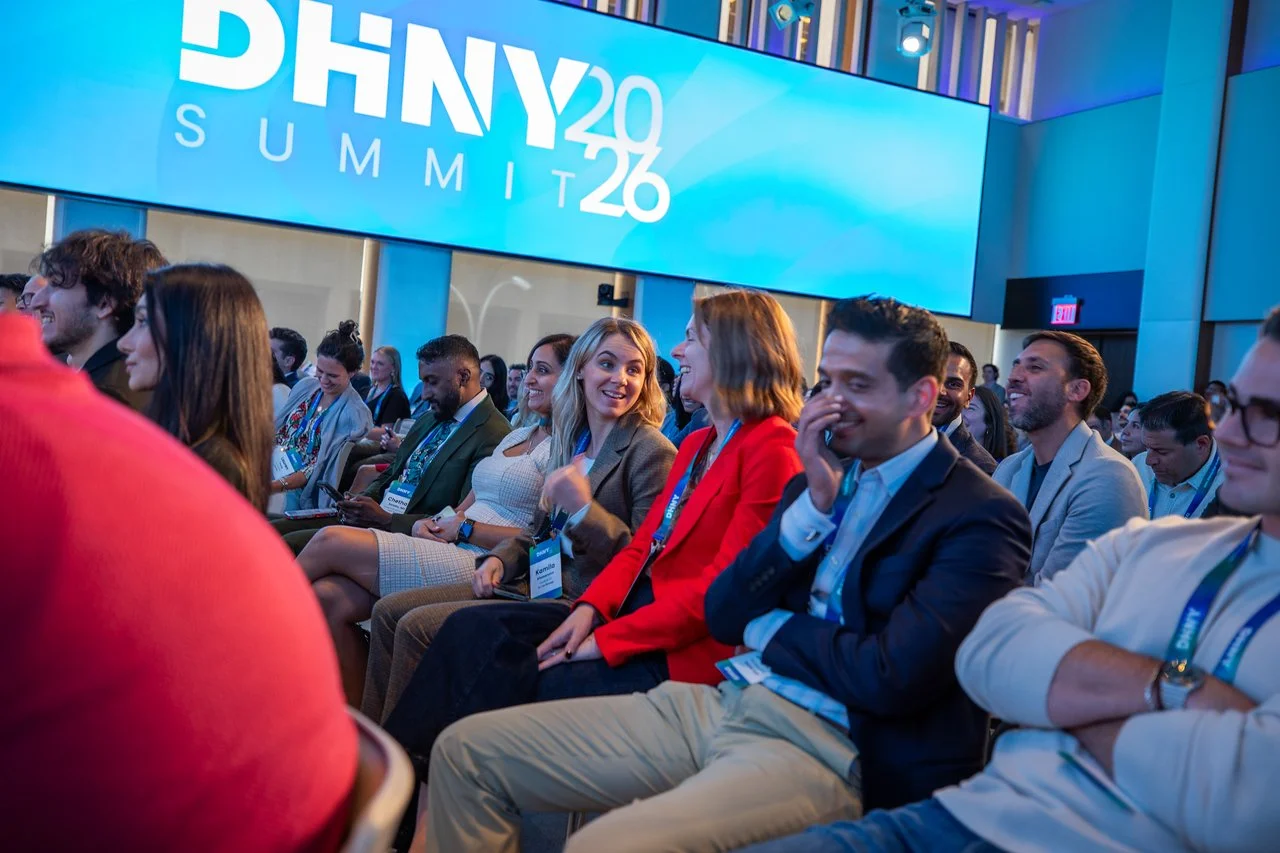
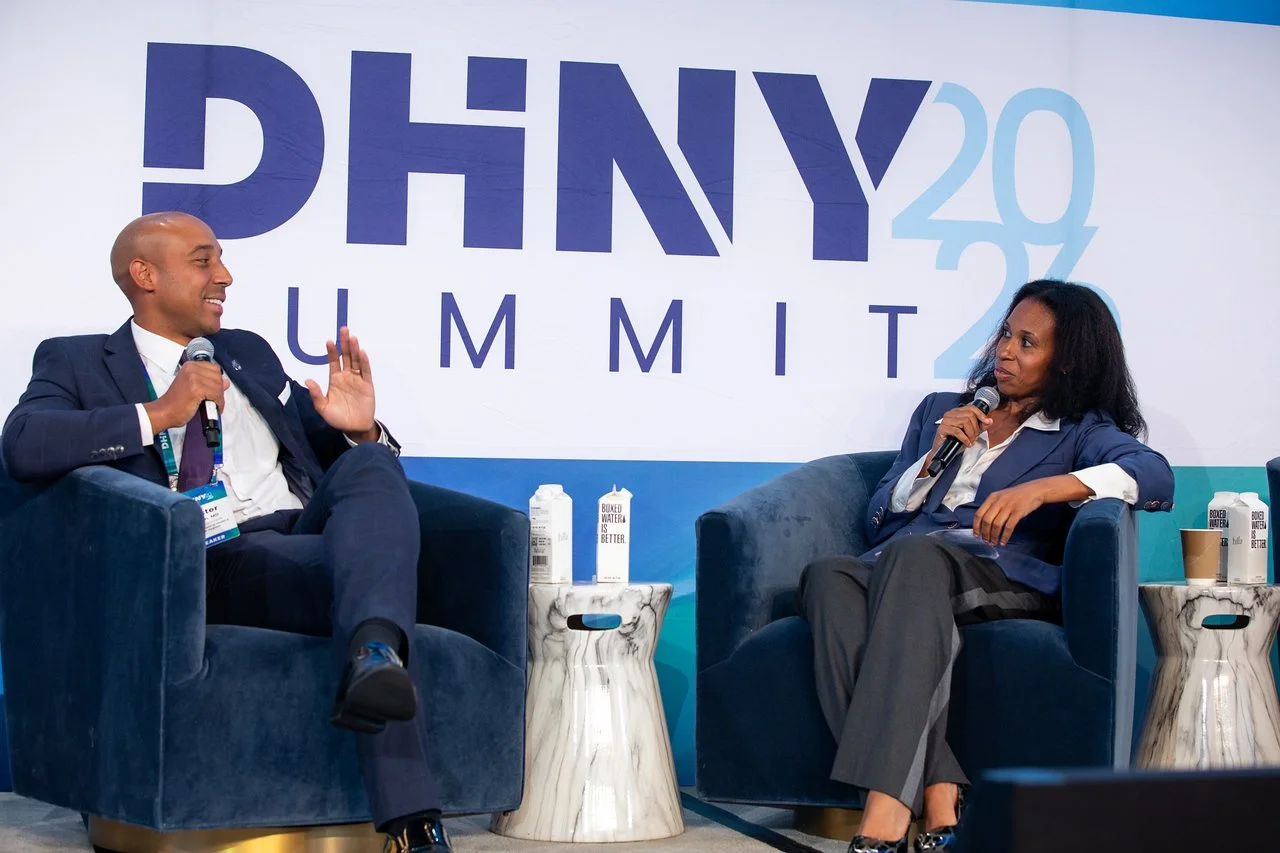
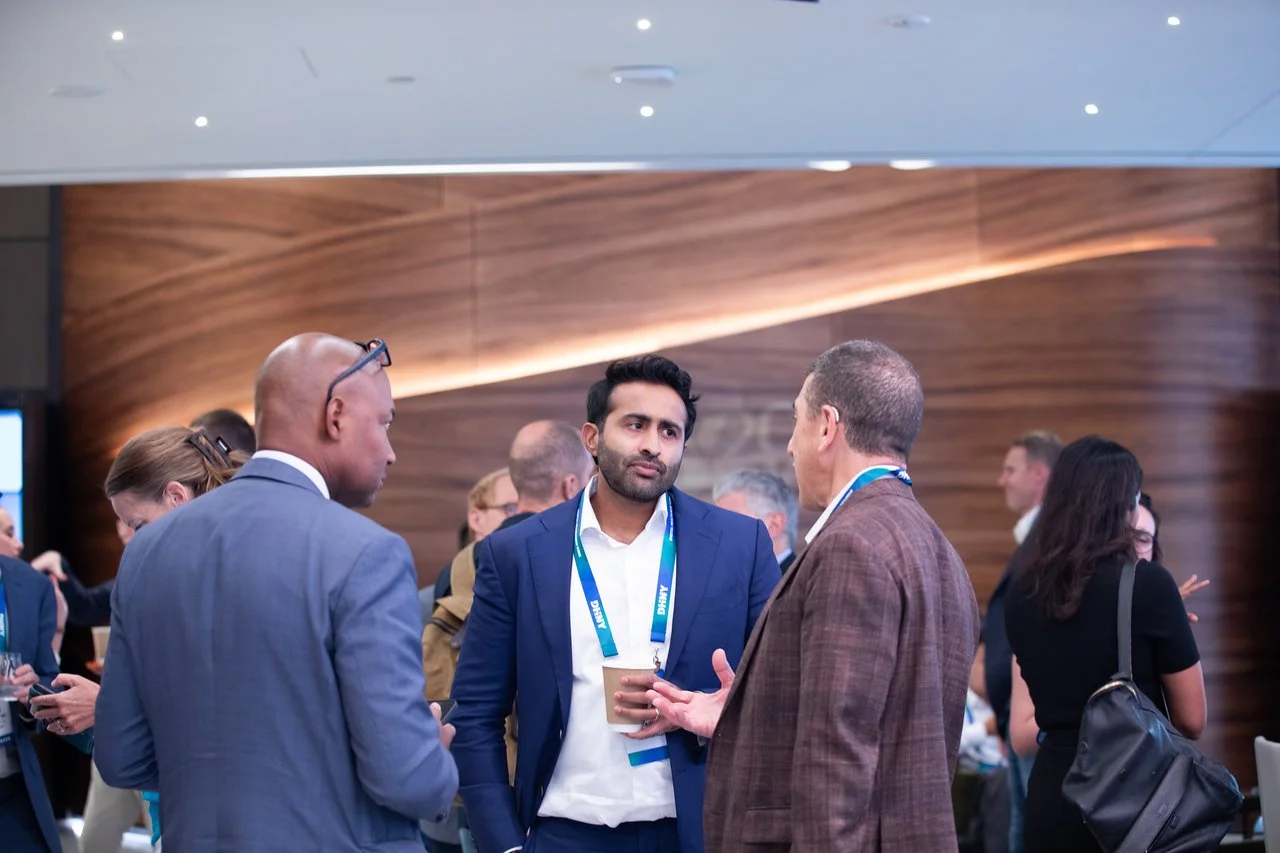
All photos by Whitnee Shulman Photography.
Five key themes emerged from the engaging and sometimes provocative mainstage dialogue:
Healthcare has moved beyond debating AI's potential. Now comes the harder part: putting it to work.
During DHNY Summit, AI showed up everywhere, from clinical decision-making and physician workflows to consumer health, drug discovery and the business of healthcare. The conversation was no longer dominated by what technology could do. Leaders wanted to know where it is working, how it fits into existing workflows and whether it is actually making healthcare better.
Dr. Robert Wachter, Bestselling Author, A Giant Leap; Professor & Chair, Dept. of Medicine UCSF and Dr. Dhruv Khullar, Associate Professor, Weill Cornell Medicine; Writer, The New Yorker explored what this rapid evolution means for the practice of medicine. Other conversations tackled AI at the point of care, autonomous agents and the changing relationship between clinicians and technology.
The excitement was real. So was the scrutiny.
The next phase of healthcare AI will not be won by the most impressive demo. It will be won by solutions that clinicians use, patients trust and healthcare organizations can prove make a difference.
1. AI HAS LEFT THE LAB
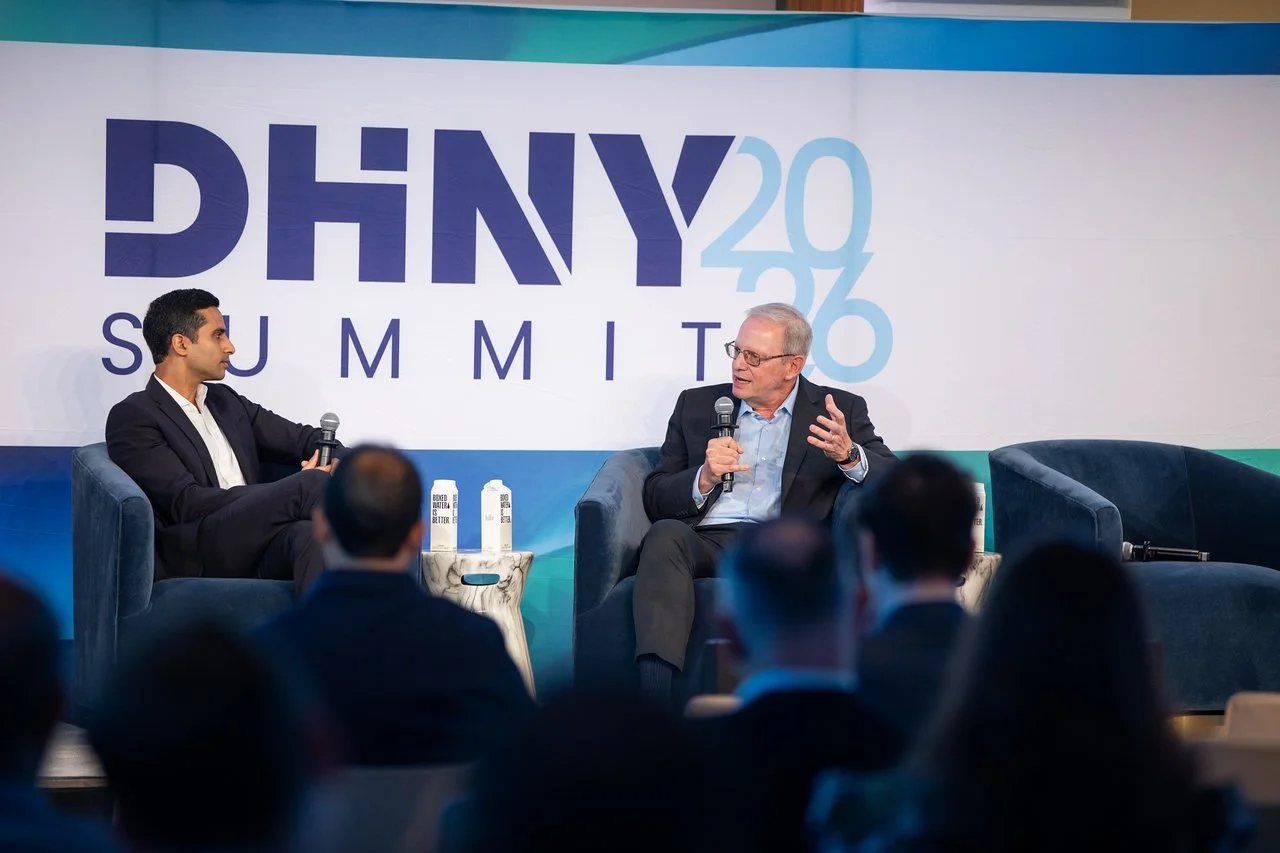
Dr. Dhruv Khullar, Associate Professor, Weill Cornell Medicine; Writer, The New Yorker & Dr. Robert Wachter, Bestselling Author, A Giant Leap; Professor & Chair, Dept. of Medicine UCSF
As AI becomes more capable, one of the day's biggest questions was distinctly human: Who do we trust?
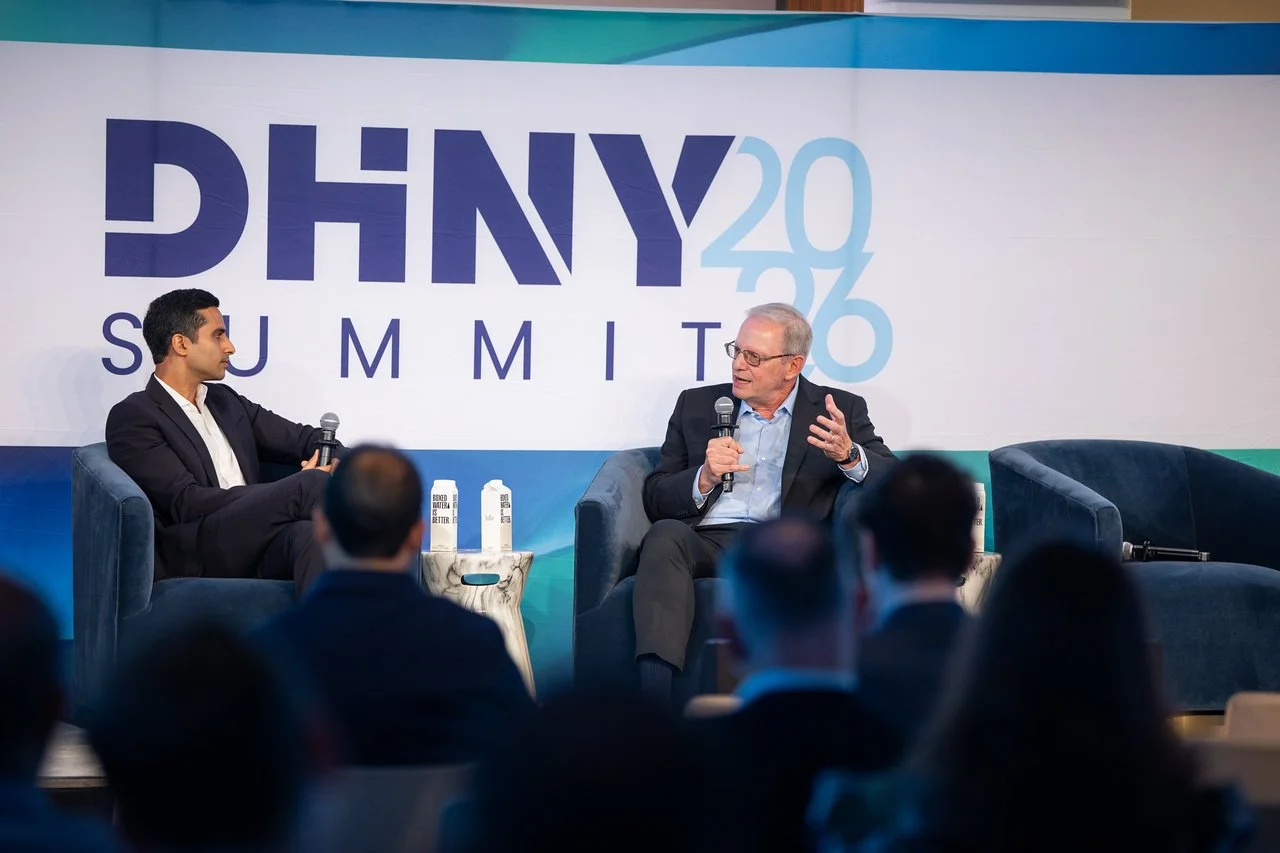
Technology is changing not only how clinicians practice medicine, but how people understand and manage their own health. Ricky Bloomfield, MD, Chief Medical Officer of ŌURA, brought the consumer perspective to a conversation about a world in which people increasingly arrive at the healthcare system armed with continuous data and sophisticated insights of their own.
That shift has enormous potential. It also raises the stakes. More information does not automatically lead to better decisions. More powerful AI does not eliminate the need for clinical judgment. And greater access to technology does not automatically create trust.
The conversation pointed to a different vision: the future isn't AI replacing human expertise. It's technology making people more capable while preserving the judgment, accountability and relationships healthcare depends on.
2. MORE INTELLIGENCE MAKES TRUST MORE VALUABLE
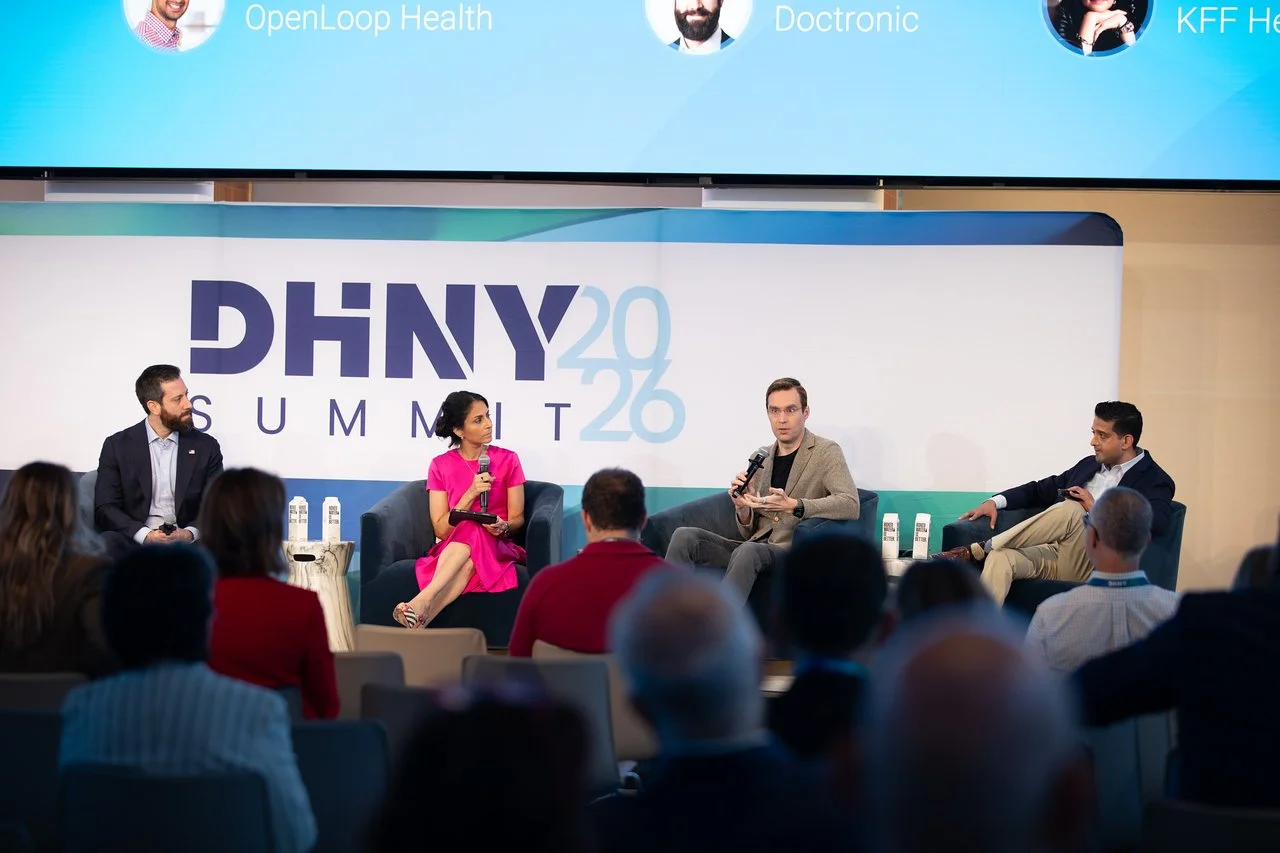
Panel discussion, “The Future of Medicine: The Impact of AI on Providers & Patients”
Some of the day's most compelling conversations challenged a basic assumption about healthcare innovation: that the goal should always be to improve the system we already have.
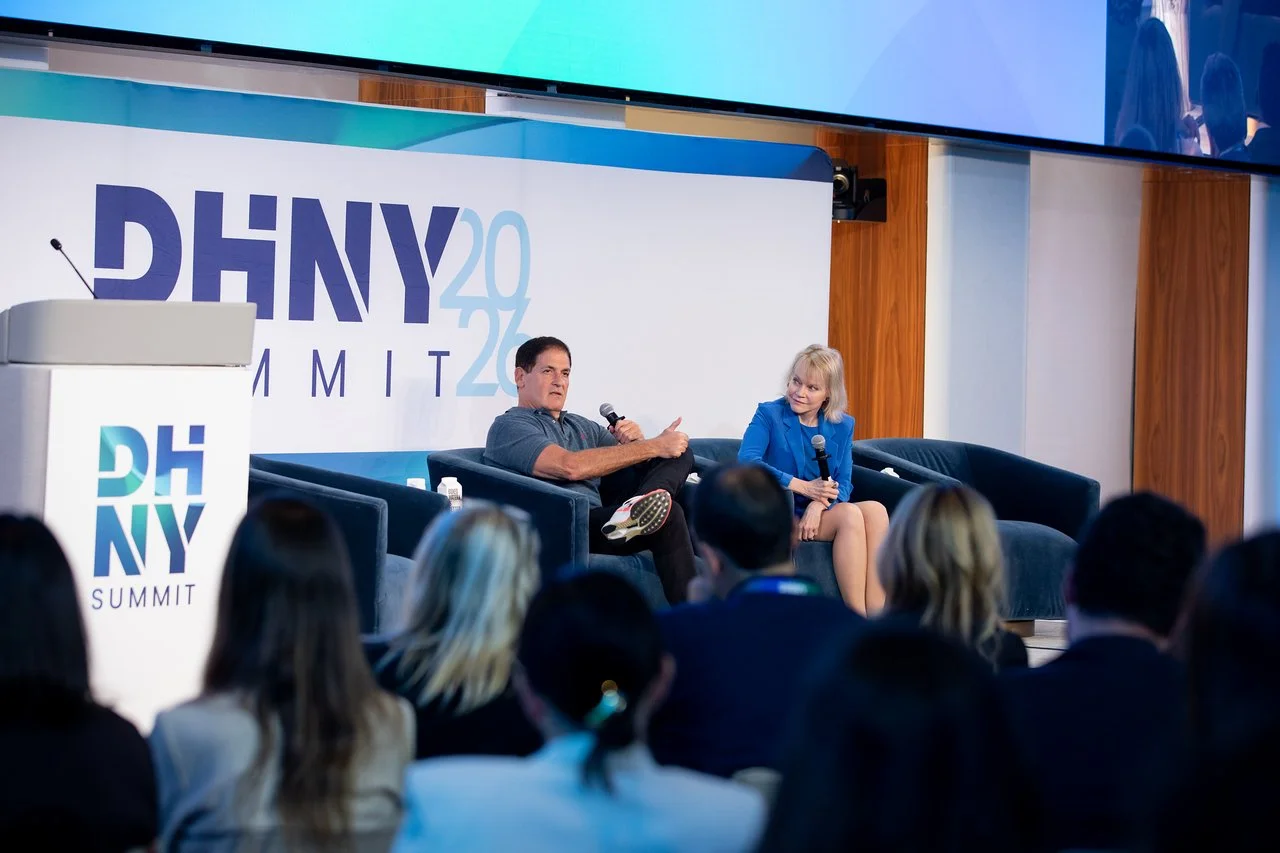
Mark Cuban, Entrepreneur, TV Personality & Investor pushed directly against that idea in his conversation with Diane Brady, Executive Editorial Director, Fortune:
“Trying to optimize a broken system doesn't really change anything. You don't want to optimize it. You want to fix it.”
His challenge extended from PBMs and prescription drug pricing to employer-sponsored healthcare and the use of AI to expose complexity that has historically made healthcare difficult to understand and even harder to change. But the idea resonated well beyond one session.
If AI can dramatically reduce the cost of certain tasks, accelerate discovery and give people access to expertise that was previously difficult to obtain, healthcare leaders have an opportunity to ask a bigger question: If we were designing healthcare today, would we design it this way? In many cases, the answer will be no. That's where some of the biggest opportunities may lie.
3. DON'T JUST MAKE THE SYSTEM FASTER. QUESTION THE SYSTEM.
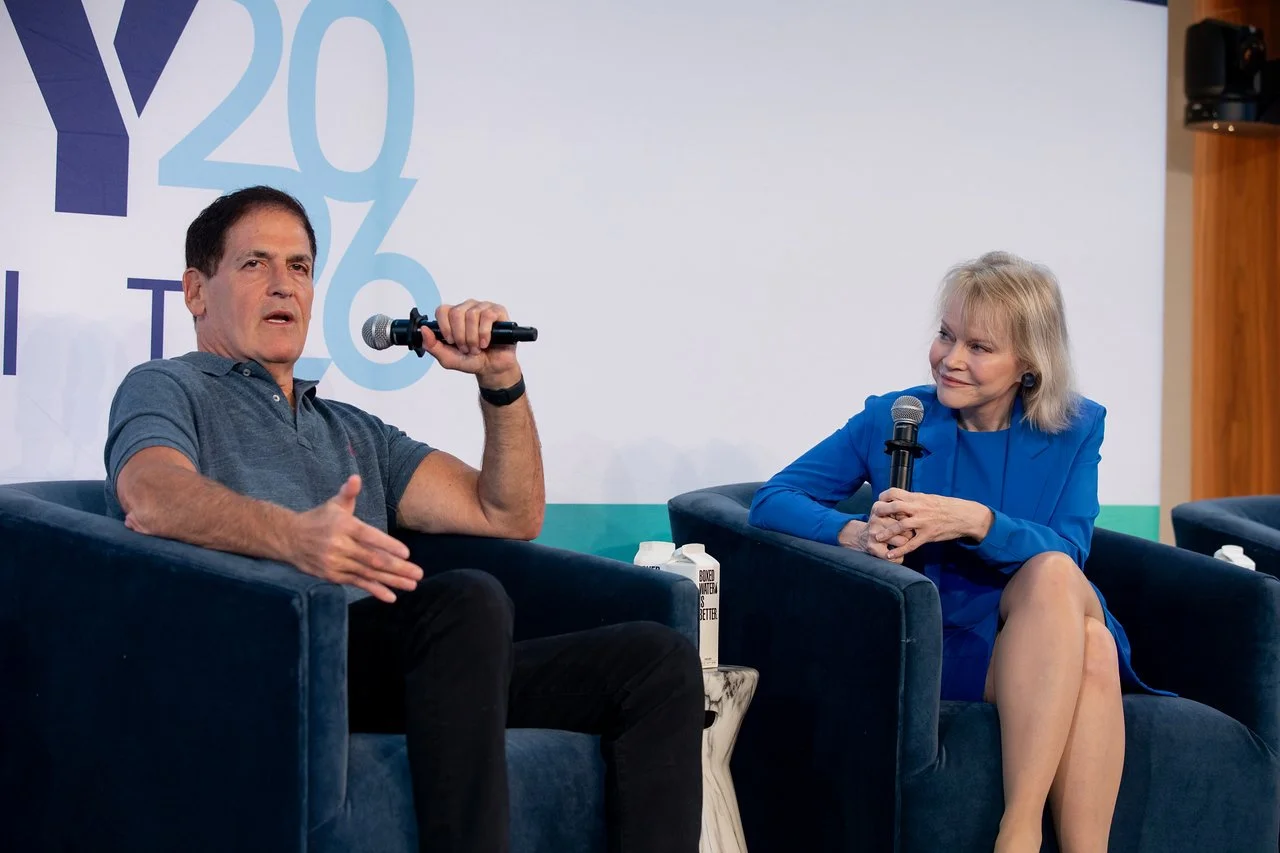
Mark Cuban & Diane Brady, Executive Editorial Director, Fortune
4. THE BAR FOR INNOVATION JUST GOT HIGHER
There is more technology, more capital and more capacity to build than ever before. That doesn't mean healthcare needs more solutions. It needs better ones.
That message came through from every side of the ecosystem. Lauren Lisher, Chief Business Officer, Mount Sinai Health System brought the perspective of an organization tasked with actually implementing change. Karen Ignagni, CEO, EmblemHealth brought the payer lens. Brenton Fargnoli, MD, Partner, Lightspeed Venture Partners explored what investors will look for as AI makes technology faster and less expensive to build. Their perspectives were different, but the pressure point was remarkably similar: prove the value.
Does it improve outcomes? Lower cost? Fit into clinical workflows? Make clinicians more effective? Reach patients? Scale beyond a pilot? As building becomes easier, differentiation becomes harder. Evidence, distribution, workflow integration, economics and adoption are becoming part of the product itself.
For innovators, that changes the assignment. Don't just show healthcare what your technology can do. Show why it matters.
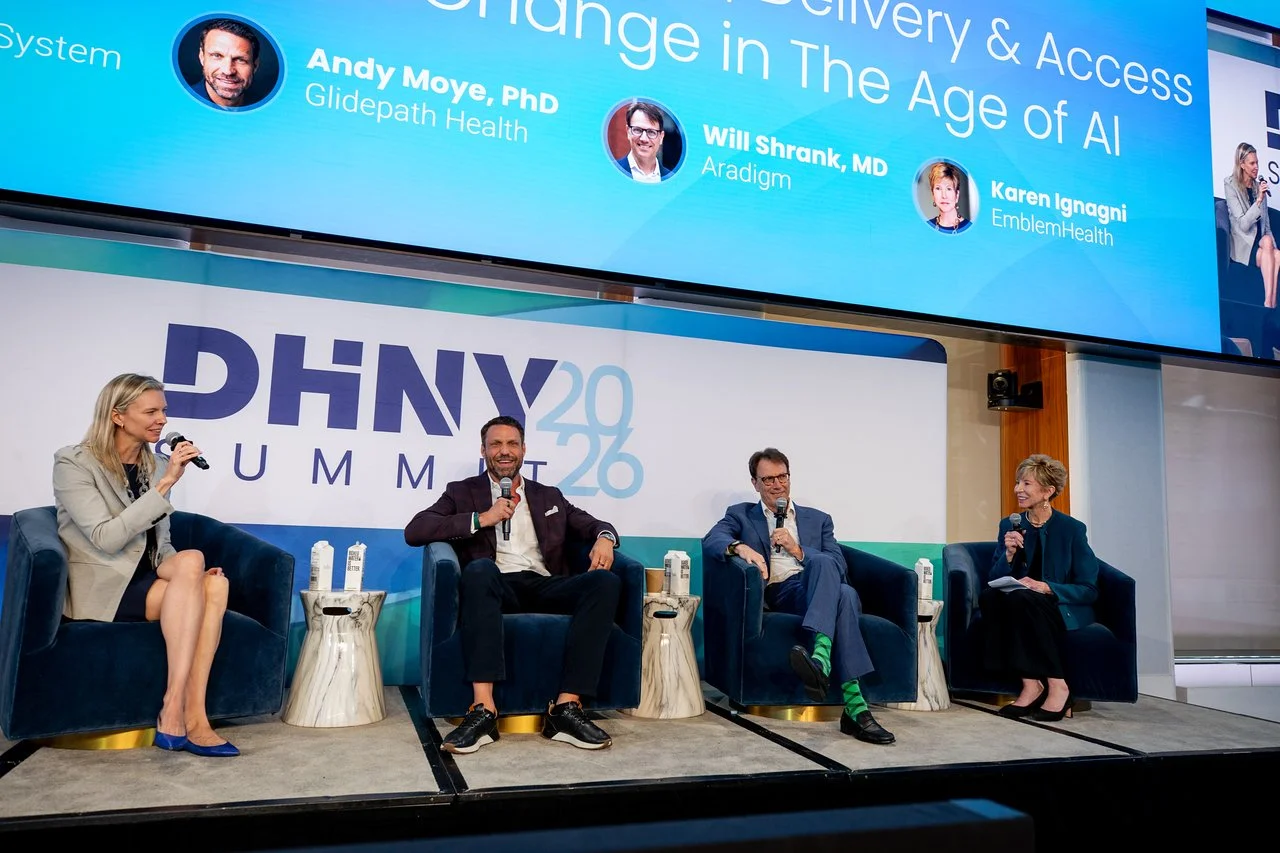
Panel discussion, “Game Changing: Therapeutics, Delivery & Access Through Systemic Change in the Age of AI”
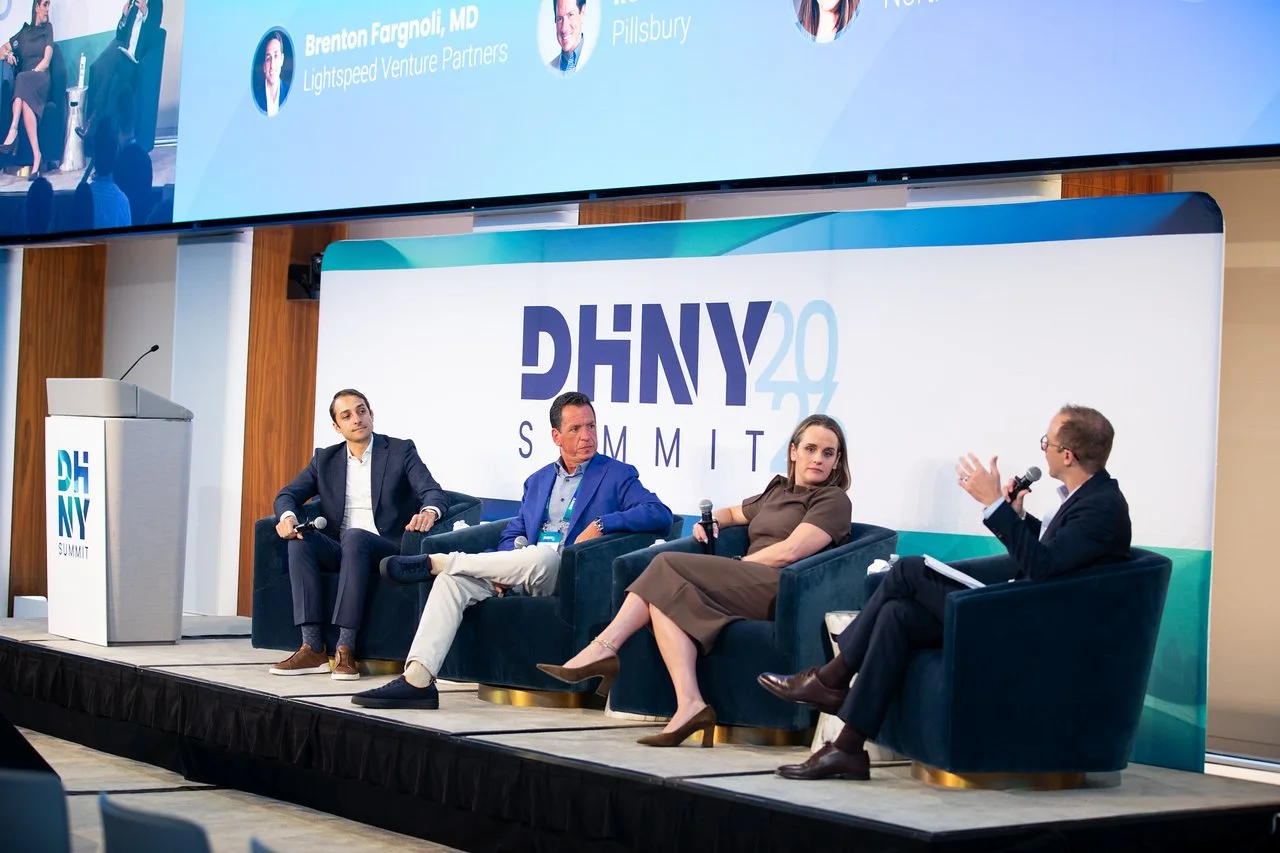
Panel discussion, “Breakthrough Trends & Digital Investment”
The pace of technological change is forcing policy, regulation and reimbursement to evolve alongside it.
Jacob Shiff ,Chief AI & Technology Officer, CMS Innovation Center and Haider Warraich, MD, Program Manager, ARPA-H brought that tension directly into the conversation, examining how government can respond as AI moves more deeply into healthcare.
The challenge is significant. Move too slowly and outdated structures can become barriers to meaningful innovation. Move without sufficient evidence, oversight or accountability and healthcare risks undermining the very trust innovation needs to succeed.
That makes policy more than a backdrop to healthcare innovation. It is becoming one of the forces that will determine which innovations can move from promising ideas to meaningful scale.
And it reinforces a larger theme that surfaced repeatedly throughout the Summit: healthcare's hardest problems cannot be solved from within a single part of the industry.
The conversation between Dr. Aletha Maybank, Executive Physician & Chief Health Strategist, Novellawells and Dr. Alister Martin, Commissioner of Health, NYC Department of Health & Mental Hygiene brought that idea into sharp focus. Public and private sectors, health systems and startups, payers and providers, clinicians and technologists increasingly need to work across traditional boundaries.
5. INNOVATION IS MOVING FASTER THAN THE RULES AROUND IT
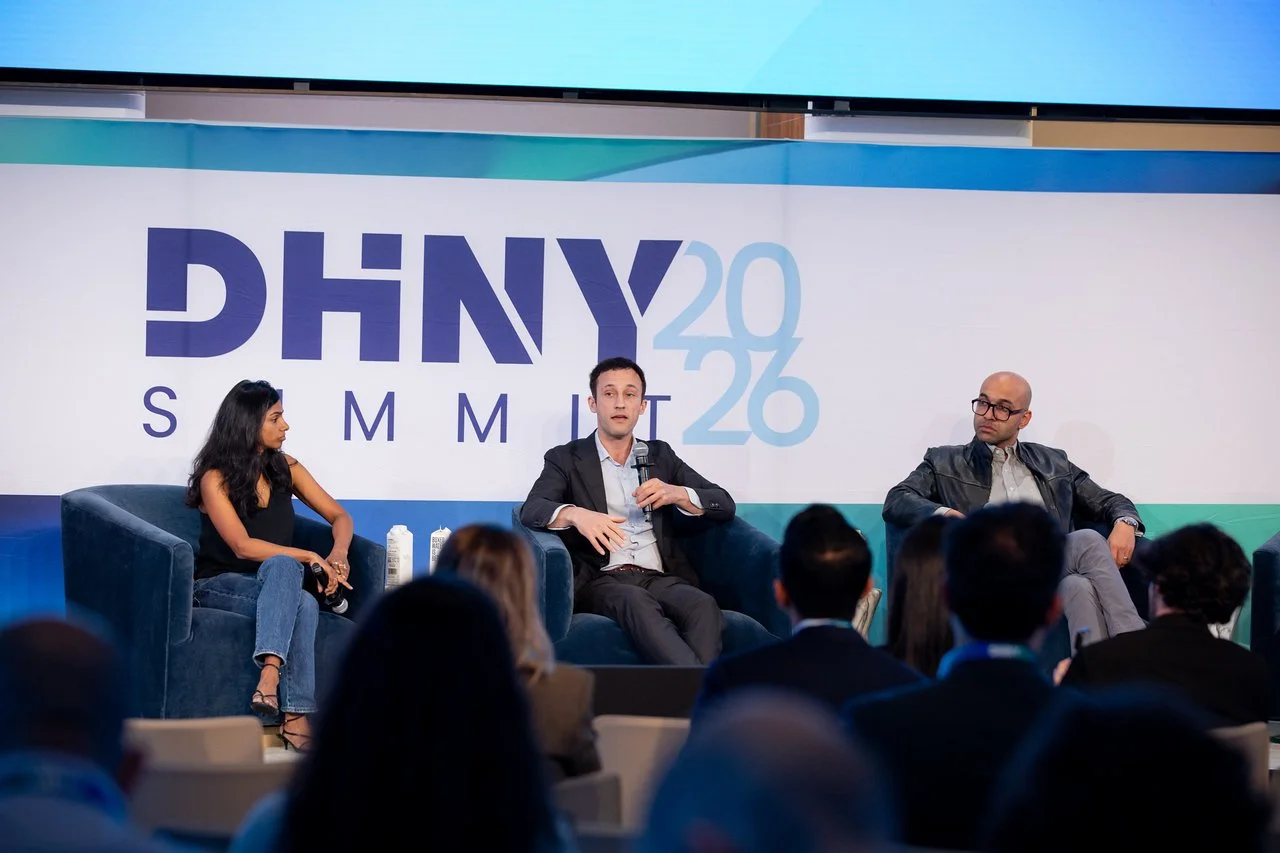
Panel discussion, “The Future of AI Policy in Healthcare”
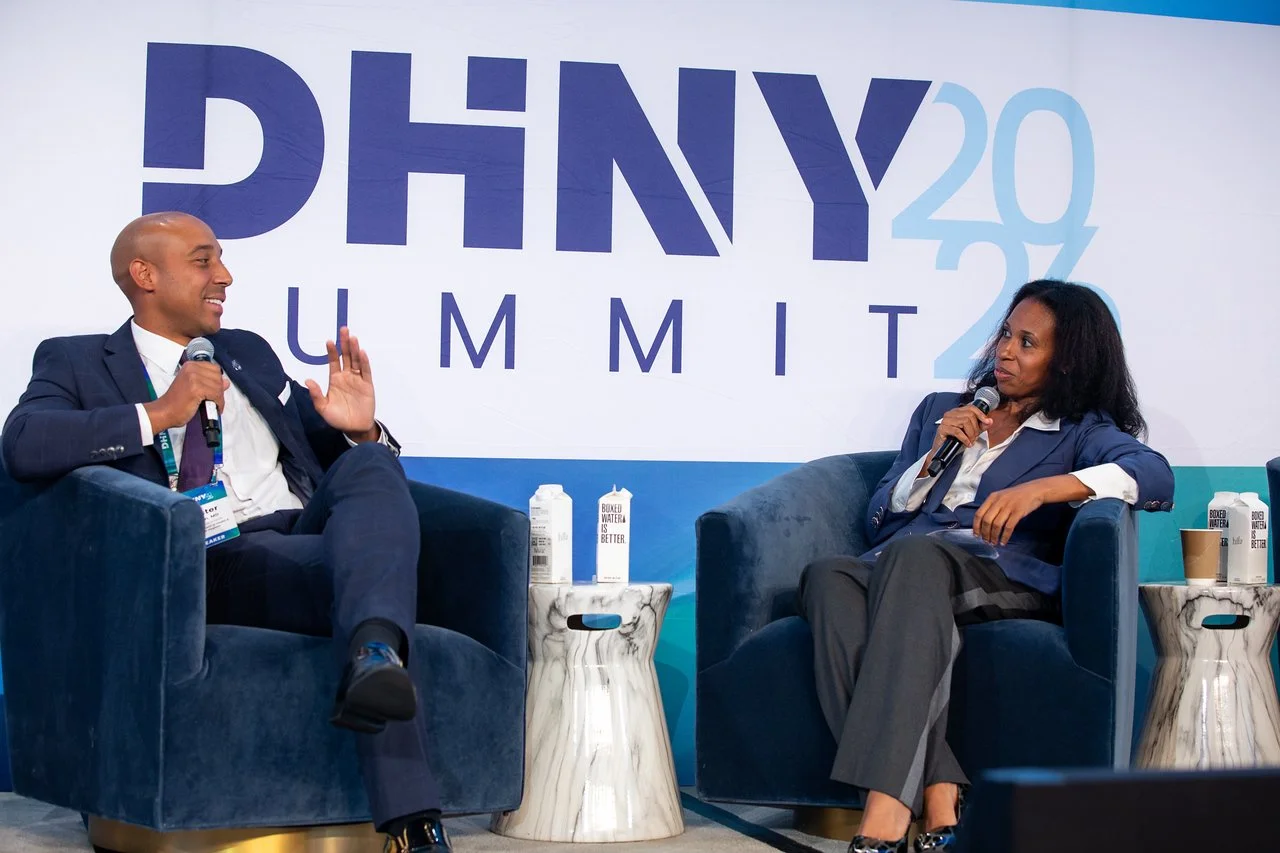
Dr. Alister Martin, Commissioner of Health, NYC Department of Health & Mental Hygiene & Dr. Aletha Maybank, Executive Physician & Chief Health Strategist, Novellawells
WHAT HAPPENS NEXT IS THE POINT
If there was one unmistakable message from DHNY Summit 2026, it was that healthcare isn't waiting for some distant future. The shift is already underway.
The technology is here. The experiments are becoming implementations. Consumers are changing. Business models are being challenged. Policy is catching up. And expectations are rising.
The questions now are tougher: Does it work? Can it scale? Can we trust it? Does it create value? And does it ultimately make healthcare better?
Kevin Ryan, Founder & CEO, AlleyCorp closed DHNY Summit with a challenge that captured the urgency of the day: don't leave thinking only about what you heard. Think about what you're going to build, change or do differently because of it.
Healthcare's next chapter will not be shaped by technology alone. It will be shaped by the clinicians, operators, entrepreneurs, investors, policymakers and leaders willing to question what we've accepted, work across traditional boundaries and turn possibility into meaningful change. The opportunity now is to act.
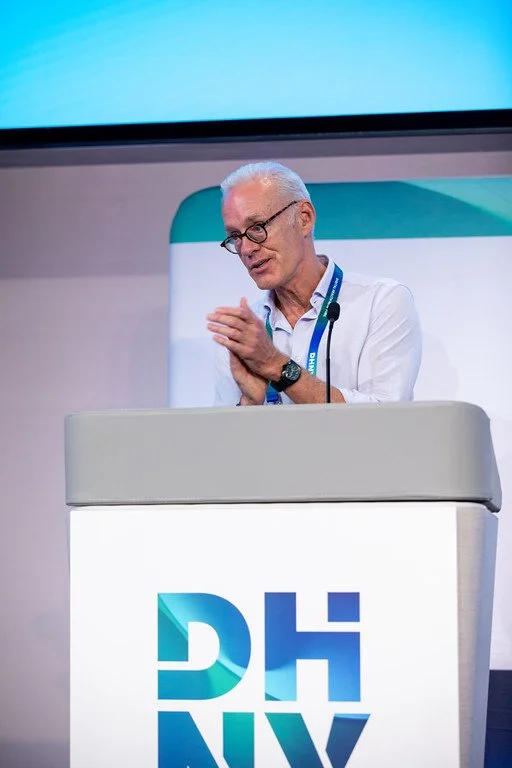
Kevin Ryan, Founder & CEO, AlleyCorp